
2025.07.15
What is Ileal Interposition?
Ileal Interposition Surgery: What It Is, Who Qualifies, Advantages and Disadvantages
Ileal Interposition Surgery is an advanced metabolic surgery primarily used to treat type 2 diabetes in patients with or without obesity. Unlike traditional weight loss surgery, the main purpose of ileal interposition is not just to reduce body weight but to improve insulin sensitivity, regulate blood sugar levels, and help achieve diabetes remission. This article will explain what ileal interposition is, who qualifies for it, and the advantages and disadvantages of this surgical option.
What Is Ileal Interposition Surgery?
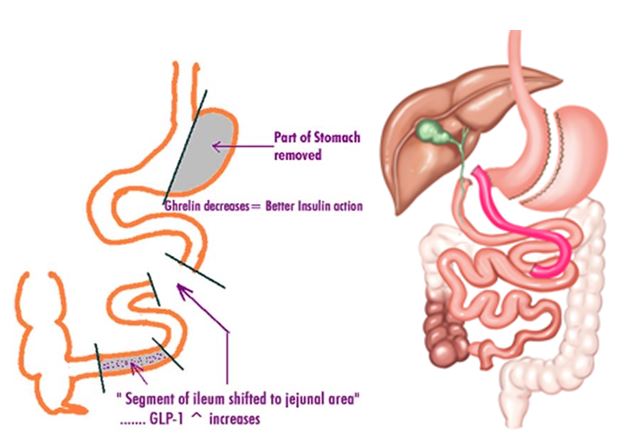
Ileal Interposition (II) is a surgical procedure where a segment of the distal small intestine (ileum) is transposed closer to the stomach or duodenum. This anatomical change leads to:
Earlier stimulation of L-cells, which release beneficial hormones like GLP-1 (Glucagon-Like Peptide-1).
Improved insulin secretion and blood sugar control.
Enhanced metabolic health without significant calorie malabsorption.
The surgery can be combined with procedures like Sleeve Gastrectomy (SG + II) or Diverted Sleeve Gastrectomy with Ileal Interposition (DSG-II) for optimal results.
Who Is a Candidate for Ileal Interposition Surgery?
Ileal interposition is typically recommended for:
Patients with uncontrolled type 2 diabetes, regardless of BMI.
Patients with moderate obesity (BMI 30-35) suffering from diabetes and metabolic syndrome.
Individuals with severe insulin resistance who have failed medical therapy.
Select non-obese diabetic patients who are not candidates for other types of bariatric surgery.
Patients with early-stage diabetes (less than 10 years) tend to achieve better outcomes.
Ileal interposition is especially suited for those who want metabolic improvements rather than dramatic weight loss.
Advantages of Ileal Interposition ✅
1. High Type 2 Diabetes Remission Rates
Many patients experience partial or complete remission of diabetes, reducing or eliminating the need for medications.
2. No Need for Lifelong Malabsorption
Unlike gastric bypass or duodenal switch, there is minimal risk of vitamin deficiencies since the digestive tract remains largely intact.
3. Improvement in Metabolic Syndrome
Benefits include better lipid profiles, lower blood pressure, and reduced insulin resistance.
4. Effective for Non-Obese Patients
Offers a surgical option for normal-weight individuals with diabetes, where classic bariatric surgery is not suitable.
5. Better Quality of Life
Patients report improved energy levels, better glucose control, and fewer hypoglycemic episodes.
Disadvantages of Ileal Interposition ❗
1. Complex Surgical Procedure
Ileal interposition is a technically demanding operation and should be performed by highly experienced metabolic surgeons.
2. Not Primarily for Weight Loss
Limited weight loss compared to standard bariatric procedures, making it unsuitable for morbidly obese patients seeking maximum weight reduction.
3. Potential Surgical Risks
As with any surgery, risks include infection, leaks, intestinal blockage, or digestive issues postoperatively.
4. Long-Term Data Is Limited
While early and mid-term results are promising, long-term studies are fewer compared to established bariatric surgeries.
5. Specialized Centers Required
The procedure is not widely available and usually performed in specialized metabolic surgery centers.
Conclusion
Ileal Interposition Surgery is a promising option for patients struggling with uncontrolled type 2 diabetes, particularly for those who are non-obese or moderately overweight. With high diabetes remission rates, improved metabolic health, and minimal risk of nutritional deficiencies, it serves as an effective alternative to traditional weight loss surgery. However, it is a technically advanced procedure with certain limitations and is best performed by experienced metabolic surgeons.
If you are considering surgical diabetes treatment, consult a qualified metabolic surgery specialist to find out if ileal interposition is the right solution for your health goals.